

When sourcing steel plates for construction, manufacturing or industrial projects, buyers often need to choose between hot rolled and cold rolled steel. Although both products are made from carbon steel and serve a wide range of applications, they differ in manufacturing processes, surface conditions, dimensional tolerances and typical uses.
Understanding these differences helps buyers select the right material, avoid unnecessary processing costs and ensure that the steel meets project requirements.
Hot rolled steel plate is produced by heating steel above its recrystallization temperature and passing it through rolling mills to achieve the required thickness.
Because the steel is rolled at high temperatures, it can be processed into a wide range of thicknesses and dimensions. After rolling, the material cools naturally, which may result in a mill scale layer on its surface.
Main characteristics of hot rolled steel plate:
Available in a wide range of thicknesses
Suitable for heavy-duty structural applications
Generally has a rougher surface finish
Usually has wider dimensional tolerances than cold rolled products
Commonly used in construction, machinery and industrial fabrication
Hot rolled steel plate is often selected for projects where structural performance, thickness availability and cost efficiency are more important than a smooth surface finish.
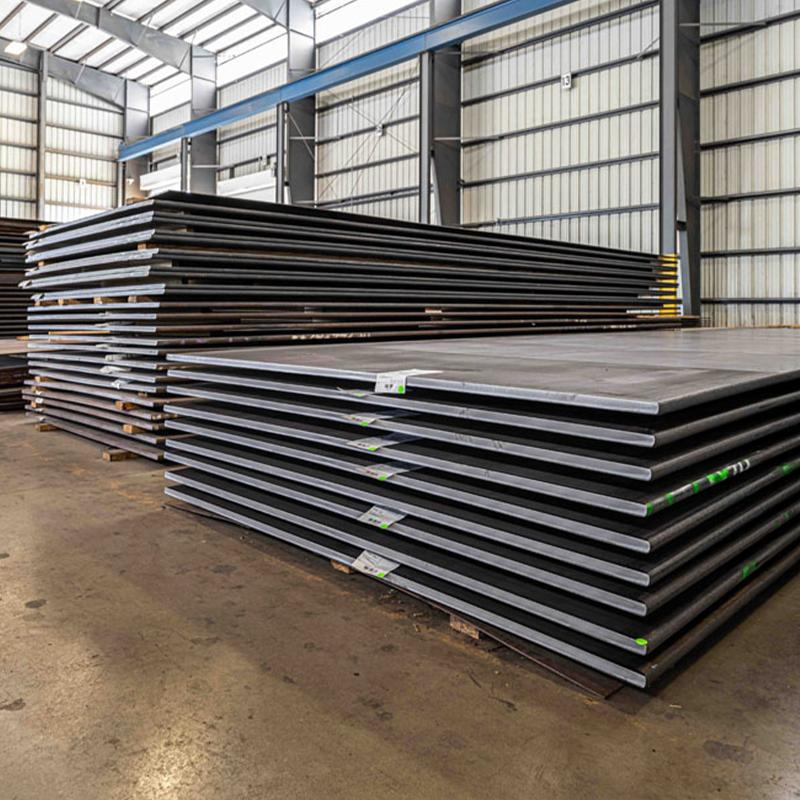
Cold rolled steel is produced by further rolling hot rolled steel at or near room temperature, usually after descaling. This additional processing reduces thickness and improves dimensional accuracy and surface quality.
Cold rolling is commonly used to produce thinner steel products with a smoother and more uniform appearance. Depending on the production route, annealing and other finishing processes may also be required to achieve the desired mechanical properties.
Main characteristics of cold rolled steel:
Smoother and more uniform surface
Better dimensional accuracy
Tighter thickness tolerances in many product specifications
Commonly available in thinner gauges
Suitable for applications requiring precise dimensions and good surface quality
Cold rolled steel is widely used in automotive components, electrical appliances, furniture and precision manufacturing.
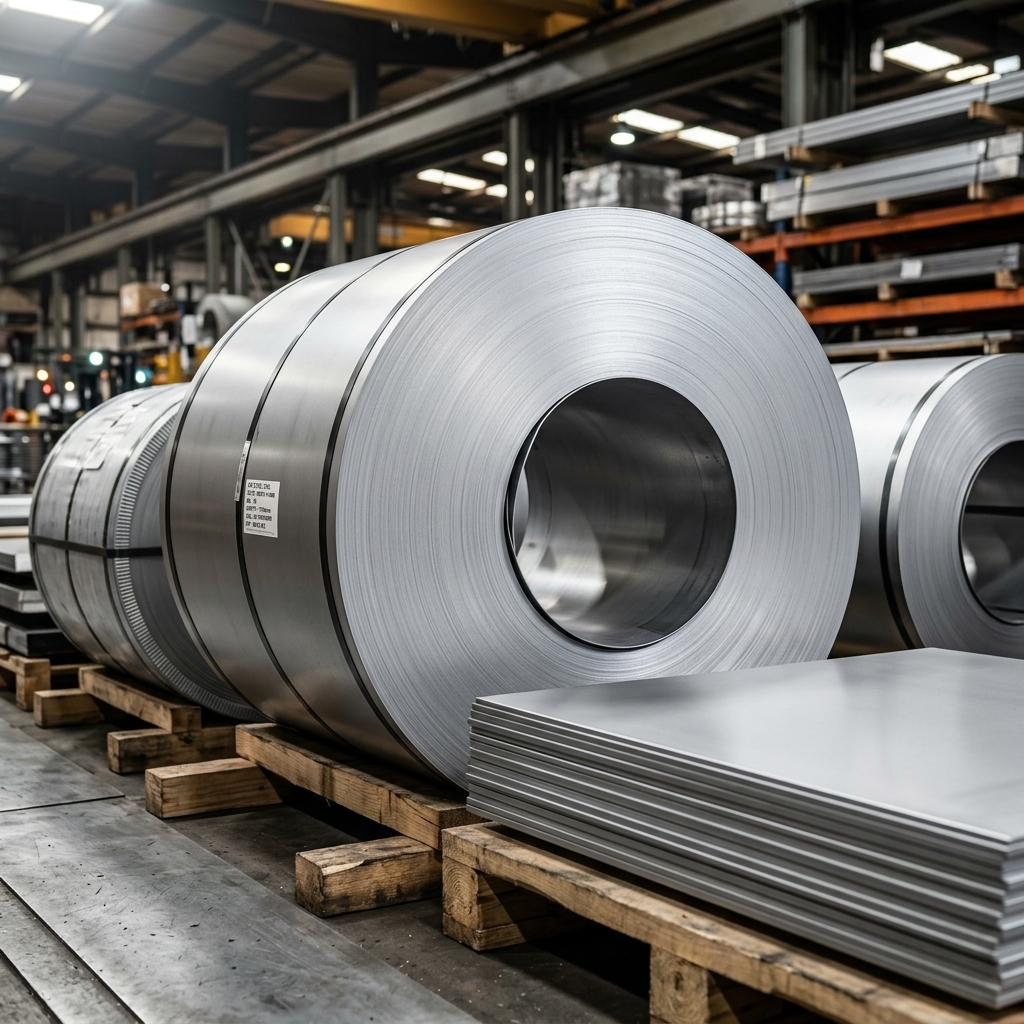
The main differences between these two products come from their manufacturing processes and the additional processing involved in cold rolling.
| Comparison | Hot Rolled Steel | Cold Rolled Steel |
|---|---|---|
| Manufacturing process | Rolled at high temperatures | Further rolled at or near room temperature |
| Surface finish | Usually rougher, may have mill scale | Generally smoother and more uniform |
| Dimensional accuracy | Generally less precise | Generally more precise |
| Thickness range | Commonly available in thicker plates | Commonly used for thinner products |
| Mechanical properties | Depends on grade and rolling condition | May have higher yield strength or hardness due to work hardening |
| Formability | Depends on steel grade and condition | Depends on grade and whether annealed |
| Typical applications | Construction, bridges, machinery and heavy fabrication | Automotive parts, appliances and precision components |
It is important to understand that cold rolled steel is not automatically stronger or better than hot rolled steel. Mechanical properties depend on the steel grade, chemical composition, rolling conditions and heat treatment. For example, annealed cold rolled steel may have good formability, while other cold worked conditions may result in higher hardness and strength.
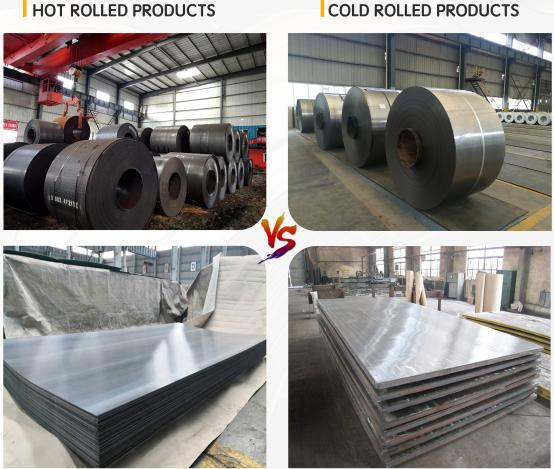
The right choice depends on the requirements of the project rather than simply choosing one product over the other.
Hot rolled steel plate is widely used in projects that require thicker materials and structural strength.
Common applications include:
Construction: Structural components, building frames and supporting structures.
Bridge Engineering: Bridge components and heavy structural fabrication.
Shipbuilding: Hull structures and other marine structural components, subject to applicable classification requirements.
Machinery Manufacturing: Machine bases, equipment frames and heavy-duty components.
Industrial Equipment: Storage equipment, platforms and fabricated steel structures.
Cold rolled steel is generally preferred when surface quality, dimensional accuracy or thinner material is required.
Typical applications include:
Automotive Manufacturing: Body panels, brackets and vehicle components.
Home Appliances: Washing machines, refrigerators and other appliance housings.
Electrical Equipment: Enclosures, cabinets and precision sheet metal parts.
Furniture Manufacturing: Metal furniture components and decorative products.
Precision Fabrication: Parts that require consistent dimensions and a smoother surface.
In some applications, hot rolled and cold rolled steel may serve similar purposes. However, they are not always interchangeable.
For example, a project requiring a smooth surface, close dimensional tolerances or thin sheet material may be better suited to cold rolled steel. In contrast, heavy structural fabrication generally favors hot rolled steel because it is available in a broader range of thicker sections.
Before substituting one product for another, buyers should check:
Required steel grade and applicable standard
Minimum yield strength and tensile strength
Thickness and dimensional tolerances
Surface finish requirements
Bending, forming and welding requirements
Applicable project specifications
For structural or pressure-related applications, material substitutions should be approved by the responsible engineer or project specification authority.
Choosing the right rolling process is only one part of steel procurement. International buyers should also confirm the following details before placing an order.
1. Steel Grade and Standard
Specify the required grade and standard, such as ASTM, EN or other applicable specifications. Do not assume that similarly named grades under different standards are automatically equivalent.
2. Thickness and Dimensions
Confirm the required thickness, width and length. For cut-to-size products, provide the exact dimensions and acceptable tolerances.
3. Surface Condition
Clarify whether the material requires a mill finish, pickled surface, oiled surface or another specified condition.
4. Mechanical Properties
Check the required yield strength, tensile strength, elongation and other relevant test requirements.
5. Inspection and Documentation
Confirm whether a Mill Test Certificate (MTC), chemical composition report or third-party inspection is required.
6. Packaging and Transportation
For international shipments, discuss suitable packaging, moisture protection, loading arrangements and shipping requirements before confirming the order.
Selecting the right steel product requires more than comparing prices. Buyers should consider material standards, dimensional requirements, surface quality and the intended application.
Jinbaifeng Steel Co., Ltd. is a China-based steel supplier offering steel sourcing options for international buyers. Whether your project requires hot rolled steel plates or cold rolled steel products, our team can help you discuss product specifications and sourcing requirements.
Contact Jinbaifeng Steel to discuss your required steel grade, dimensions, quantity and destination port, and request a quotation for your project.