

Look at the framework of a warehouse, the support system of an industrial building or the structure of a steel platform, and you may find channel steel playing an important role.
With its open U-shaped or C-shaped cross-section, channel steel provides structural support while allowing convenient connections to other steel components. Its shape makes it useful in applications where beams, brackets, frames and supporting members need to be assembled efficiently.
However, not all steel channels have the same profile or structural characteristics. Different channel sections are designed for different applications, and selecting the right one requires an understanding of their dimensions, orientation and load requirements.
The defining feature of channel steel is its cross-section, which generally consists of a web and two flanges.
This open profile offers several practical advantages:
Provides structural support in different framework configurations
Allows convenient bolting and welding connections
Can be combined with other steel sections
Offers flexibility in fabrication and installation
Provides a practical solution for support frames and secondary structural members
Unlike a closed rectangular hollow section, a steel channel has an open cross-section. This affects its torsional behavior and resistance to bending in different directions.
For this reason, channel steel should be positioned and connected according to the structural design rather than selected by dimensions alone.
Channel steel is available in different sectional shapes and dimensional systems. Understanding these differences helps buyers identify the right product for their projects.
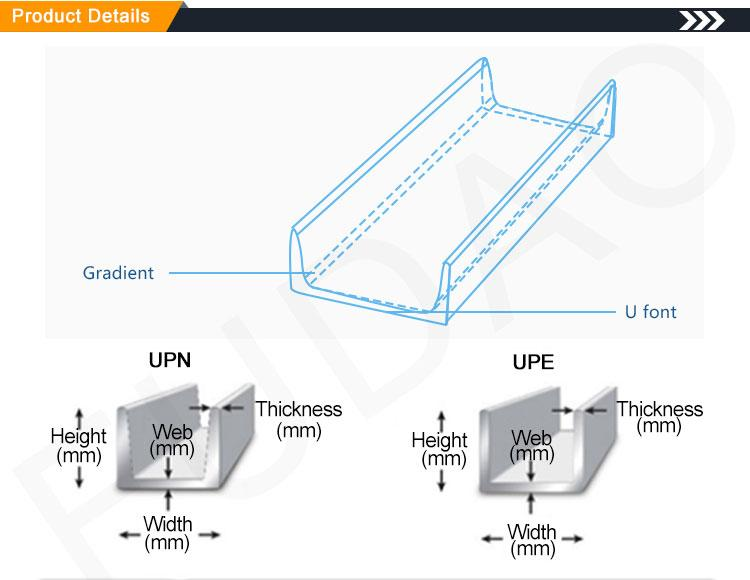
UPN and UPE are common European channel section designations.
UPN channels generally have tapered flanges, while UPE channels have parallel flanges.
The difference in flange geometry can influence connection details, fabrication and the way the section is integrated into a steel structure.
American structural channel sections are commonly designated using systems such as C-shapes and MC-shapes.
Their dimensions and sectional properties follow the relevant product standards and design references.
Buyers working on projects in North America should provide the required section designation rather than assuming that a European or Chinese channel with similar dimensions is equivalent.
Chinese channel steel is commonly supplied under GB standards and is often identified by nominal height and other sectional dimensions.
Common designations include channel sections such as 10#, 12#, 14# and 16#.
The exact dimensions and sectional properties should be confirmed against the relevant GB standard and product specification.
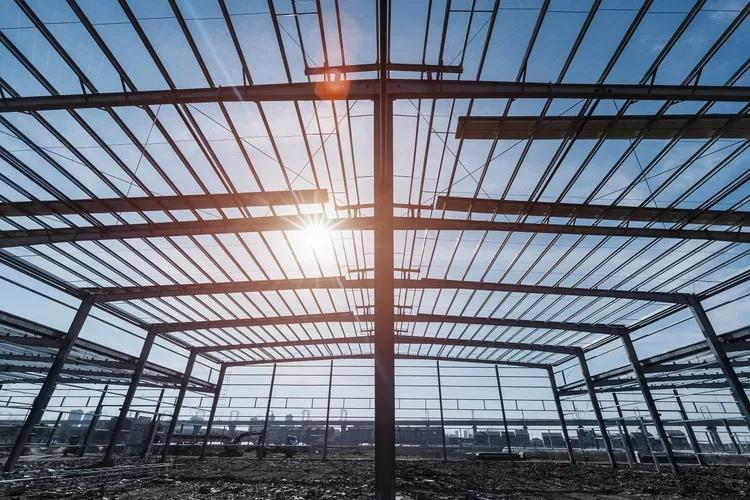
The versatility of channel steel makes it suitable for many industrial and construction applications.
Industrial Buildings and Workshops
Channel sections are used in supporting frameworks, roof structures, platforms and equipment installations. They can be incorporated into secondary structural members and fabricated assemblies.
Steel Platforms and Walkways
Steel channels are frequently used in platform frames, stair supports and access structures. Their open profile allows them to be connected with plates, beams and other structural components.
Machinery and Equipment Frames
Equipment manufacturers use channel steel for machine bases, support frames and structural components. The final selection depends on equipment loads, vibration and connection requirements.
Warehousing and Storage Systems
Channel sections can be used in storage frameworks, support structures and material-handling installations.
Transportation and Infrastructure
Steel channels are also found in vehicle components, bridge-related fabrication, infrastructure supports and other engineered structures.
The suitability of a particular section depends on its structural properties, connection design and operating conditions.
When purchasing channel steel, buyers should understand the main dimensions used to identify a section.
A typical channel section includes the following measurements:
Height (H): Overall depth of the section
Flange Width (B): Width of the flanges
Web Thickness (t1): Thickness of the vertical web
Flange Thickness (t2): Thickness of the flanges
Length (L): Overall product length
For example, a channel steel specification may be expressed as 100 × 48 × 5.3 × 8.5 mm, depending on the applicable dimensional system.
The numbers should always be checked against the relevant standard because different channel series may use different dimensional conventions.
For engineering applications, buyers should also review section weight, cross-sectional area and relevant sectional properties.
The open cross-section of channel steel means that its structural behavior differs from that of H-beams, I-beams and rectangular hollow sections.
Several factors need to be evaluated during structural design:
Bending Direction
A channel section has different stiffness about its principal axes. Its orientation affects how it performs under bending loads.
Torsional Behavior
Because channel steel is an open section, it may be more sensitive to torsion than certain closed structural sections.
Connection Design
Bolted and welded connections should account for the geometry of the web and flanges, as well as the applied loads.
Buckling and Stability
The unsupported length, restraint conditions and load distribution influence the stability of a channel member.
For load-bearing applications, engineers should use the actual sectional properties and applicable structural design standards rather than selecting a section based only on its nominal size.
Channel steel is available in different material grades according to the required strength, applicable standard and project specifications.
Commonly encountered grades include:
| Standard | Common Grades |
|---|---|
| Chinese GB standards | Q235B, Q355B |
| European EN standards | S235JR, S275JR, S355JR |
| ASTM standards | ASTM A36 |
These grades are examples of commonly specified structural steels and should not be considered automatically interchangeable.
Surface condition is another important consideration.
Black Channel Steel: Commonly supplied in a hot-rolled condition for general structural fabrication.
Galvanized Channel Steel: Used where additional corrosion protection is required.
Painted Channel Steel: May be specified for projects requiring a particular protective coating system.
The selected grade and surface treatment should meet the project's technical and environmental requirements.
A suitable channel steel section should match the engineering drawings, material requirements and installation conditions.
When requesting a quotation, provide the section designation or detailed dimensions, material grade, applicable standard, required length and quantity.
For projects involving different channel profiles, it is also helpful to provide drawings or a specification sheet so that the required sections can be identified accurately.
Jinbaifeng Steel Co., Ltd. provides steel sourcing services for international customers looking for structural steel products from China.
Whether you require Chinese standard channel steel, UPN channels or other structural steel sections, our team can help review your requirements and discuss suitable supply options.
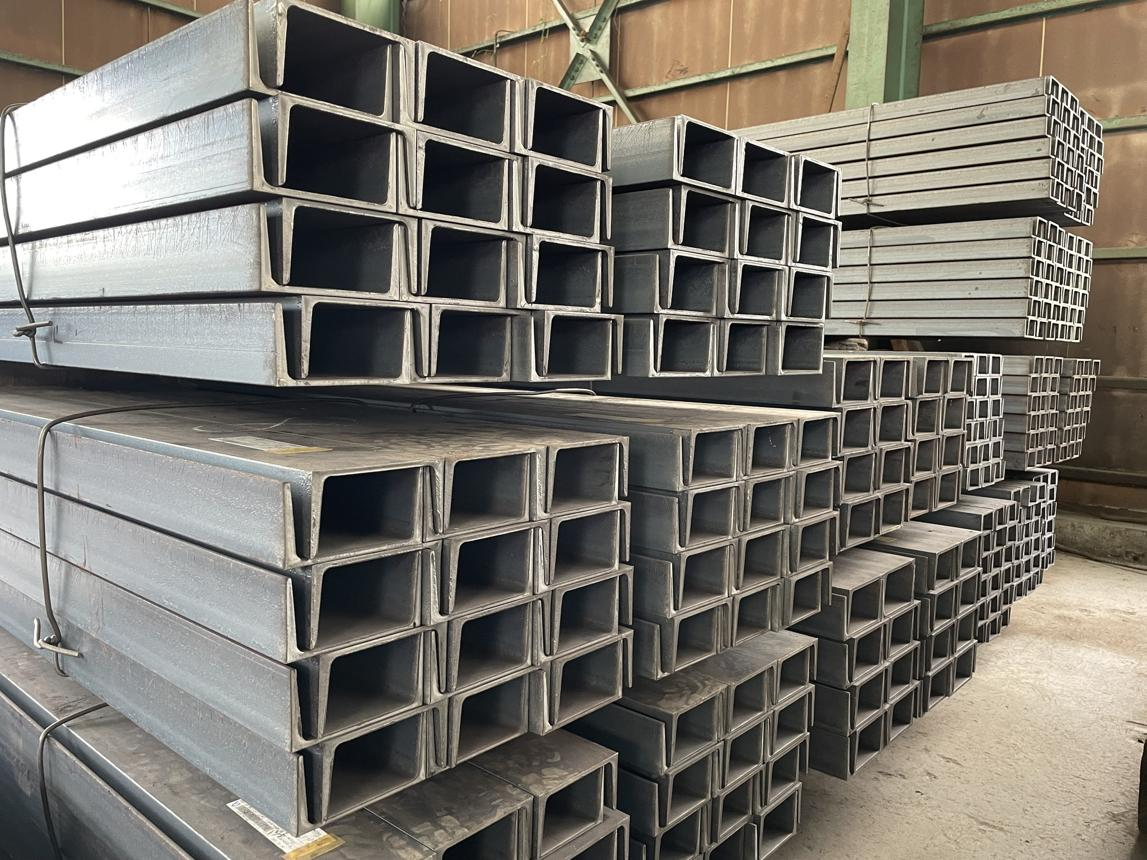
Contact Jinbaifeng Steel Co., Ltd. for channel steel specifications and quotation inquiries.