

H beams and I beams are two widely used structural steel products in the construction and engineering industries. Both feature an I-shaped cross-section and are designed to provide strength and stability in structural applications.
Although they may look similar, H beams and I beams have different cross-sectional proportions, dimensional characteristics, and typical applications. Choosing the right steel section is important for ensuring structural performance and controlling construction costs.
For steel distributors, contractors, and engineering companies, understanding these differences can help simplify material selection and procurement.
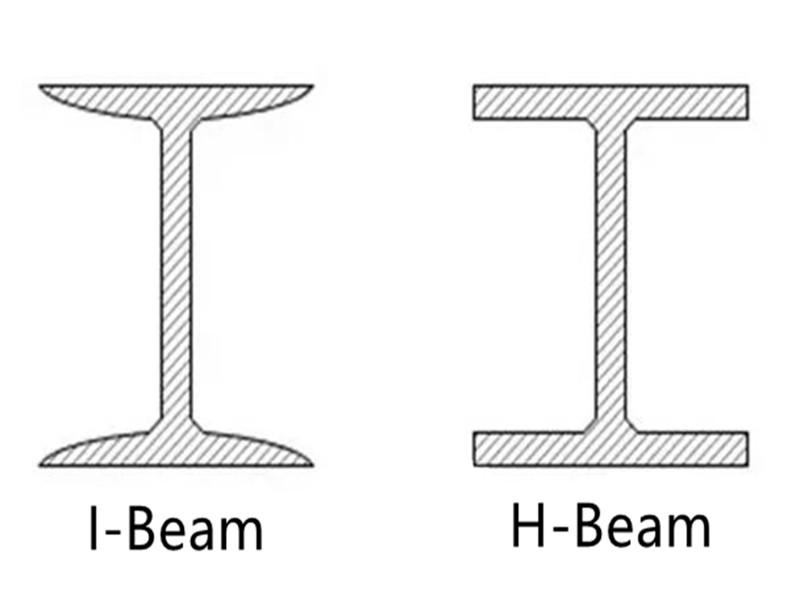
The most noticeable difference between H beams and I beams is their cross-sectional shape.
H Beam
An H beam has relatively wide flanges and a web connecting the two flanges. Its flange width is generally similar to or greater than its section height, depending on the specific series.
The flanges are commonly parallel, making H beams suitable for a wide range of structural applications.
I Beam
An I beam typically has narrower flanges compared with its overall section height. Traditional rolled I beams may also feature tapered inner flange surfaces.
Its cross-section resembles the letter I, and it is commonly used in beams and structural framing.
The exact geometry depends on the applicable product standard and section series.
Understanding their dimensional and structural characteristics is important when selecting between these two products.
| Comparison | H Beam | I Beam |
|---|---|---|
| Cross-Section | H-shaped | I-shaped |
| Flange Width | Generally wider | Generally narrower |
| Flange Design | Commonly parallel | May be tapered or parallel |
| Section Proportions | Often wider relative to height | Usually taller relative to width |
| Common Applications | Columns, beams, structural frames | Floor beams, roof structures, framing |
| Typical Advantages | Good structural versatility and stability | Efficient for many beam applications |
H beams are frequently used in columns and major structural frames because their relatively wide flanges provide useful resistance to bending about both principal axes.
I beams are commonly used as horizontal structural members, where resistance to bending about the major axis is an important design consideration.
However, actual load-bearing capacity depends on section dimensions, steel grade, support conditions, connection design, and applicable structural codes.
Neither section is universally stronger than the other.
Different structural steel standards offer different section series and dimensions.
Common H beam series include:
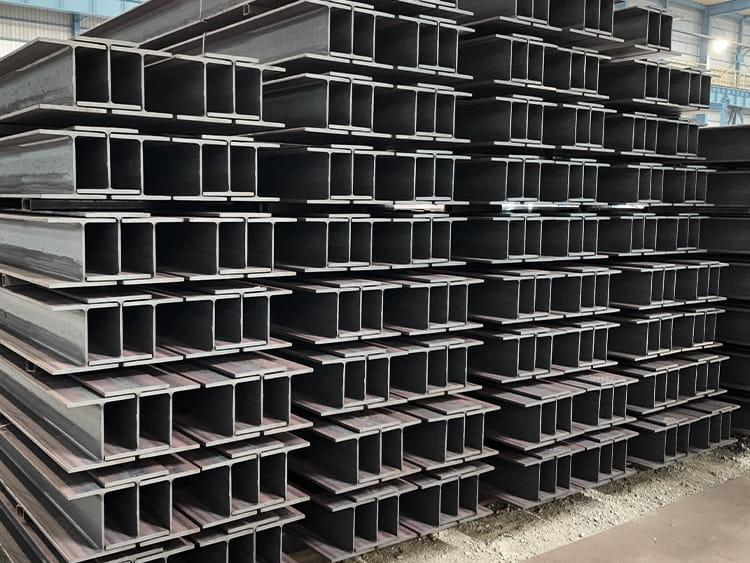
HW: Wide-flange H sections, commonly used for columns and structural frames.
HM: Medium-flange H sections, used in various structural applications.
HN: Narrow-flange H sections, commonly used in beams and other structural members.
These designations are commonly used in Chinese steel section classifications.
I beams are available in different series depending on their dimensions and manufacturing standards.
Common types include:
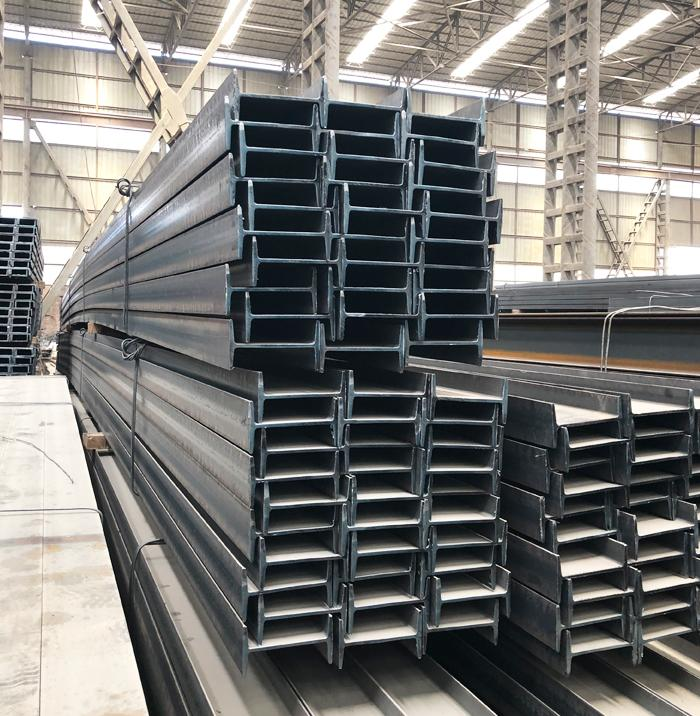
Standard I Beams: Traditional I-shaped structural sections.
Light I Beams: Sections designed with lighter cross-sectional dimensions.
IPE Beams: European parallel-flange I sections.
IPN Beams: European I sections with tapered flanges.
When ordering, buyers should confirm the exact dimensional standard rather than relying on product names alone.
Steel beam dimensions are usually expressed using several measurements.
For example, an H beam specification may include:
Section height (H)
Flange width (B)
Web thickness (t1)
Flange thickness (t2)
Length
Unit weight
I beam specifications also use section height, flange width, web thickness, flange thickness, and unit weight.
These measurements are important when comparing products from different manufacturers and standards.
Buyers should always confirm the dimensional tolerance and theoretical weight against the applicable product standard.
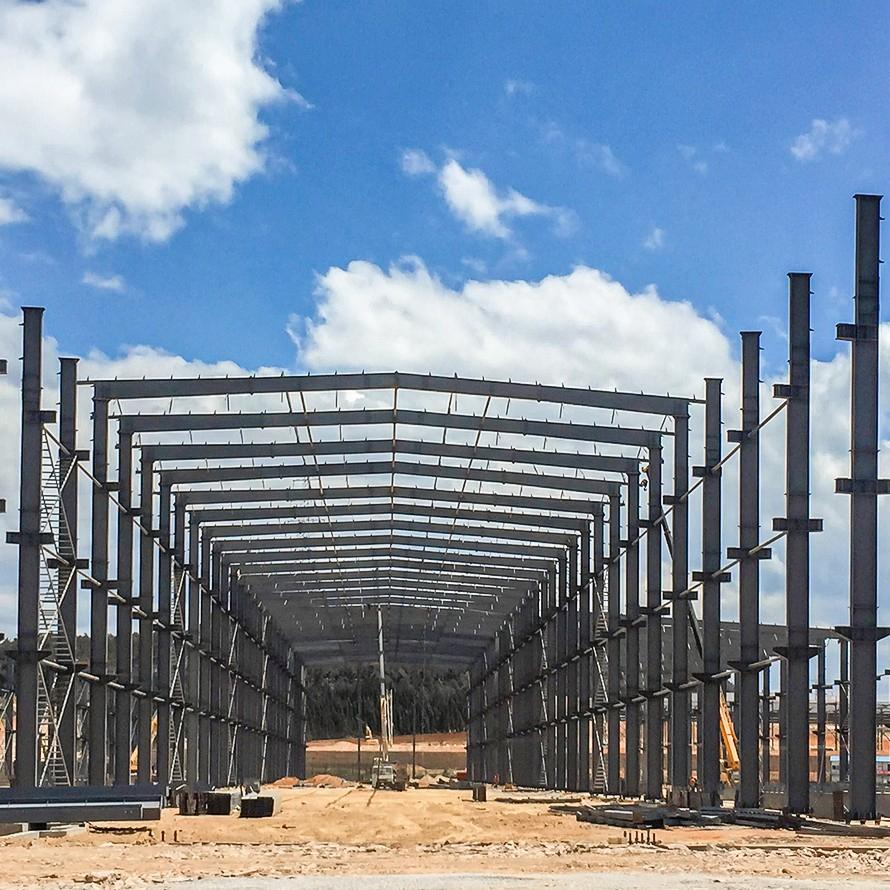
Both products are widely used in structural engineering, but their applications vary according to design requirements.
Industrial Buildings and Warehouses
H beams are commonly used in building frames, columns, and main structural supports. I beams can be used for secondary beams and other supporting members.
Bridges and Infrastructure
Structural steel beams are used in bridge components, support structures, and infrastructure projects. The selected section depends on engineering calculations and design specifications.
Factories and Workshops
H beams are frequently used in factory frames, industrial buildings, and heavy-duty structural supports.
Commercial and Residential Construction
Both H beams and I beams are used in building structures, floor systems, and roof frameworks.
Machinery and Equipment Manufacturing
Structural sections are also used in equipment frames, supporting structures, and industrial platforms.
Choosing the right steel beam involves more than comparing its size and price.
Before placing an order, buyers should confirm the following details:
Steel Section Type: Specify whether H beam, I beam, or another structural steel section is required.
Dimensions: Provide the section height, flange width, web thickness, and flange thickness.
Steel Grade: Common structural steel grades include Q235B, Q355B, S235JR, S275JR, and S355JR, depending on the required standard and market.
Length: Specify standard or customized lengths according to project requirements.
Quantity: Provide the required tonnage or number of pieces.
Applicable Standard: Confirm the required dimensional and material standards, such as GB, EN, ASTM, or JIS.
Surface Condition: Specify whether the beams require a black surface, painted finish, or other treatment.
Providing complete specifications helps suppliers identify suitable products and prepare accurate quotations.
Jinbaifeng Steel Co., Ltd. is a China-based steel supplier providing structural steel and other steel products to international buyers.
Our product range includes H beams, I beams, angle steel, channel steel, carbon steel plates, galvanized steel products, and steel pipes.
We support steel sourcing requirements for construction companies, engineering contractors, steel distributors, and industrial manufacturers.
Whether you need H beams for structural frames or I beams for construction projects, we can assist with product selection and sourcing based on your required dimensions, steel grades, and specifications.
To request a quotation, please provide the following information:
Steel section type
Required dimensions
Steel grade
Applicable standard
Required length
Order quantity
Delivery destination
Contact Jinbaifeng Steel Co., Ltd. to discuss your structural steel requirements and obtain a competitive quotation.