

API 5L and API 5CT are two important standards in the oil and gas industry. Both cover steel pipes used in petroleum-related applications, but they serve different purposes.
API 5L is primarily designed for pipeline transportation, while API 5CT covers casing and tubing used in oil and gas wells.
For international buyers, understanding the differences between these two standards is essential when sourcing steel pipes for energy projects.
In this guide, we will compare API 5L and API 5CT, introduce their common steel grades, and explain the key factors to consider when purchasing these products.
API 5L is a standard developed by the American Petroleum Institute for line pipes used in the transportation of oil, natural gas, and other fluids.
These pipes are widely used in onshore and offshore pipeline systems, connecting production facilities, processing plants, storage terminals, and distribution networks.
API 5L includes different steel grades designed to meet various strength and pipeline operating requirements.
Common grades include:
| Grade | Typical Yield Strength (Minimum) |
|---|---|
| API 5L Grade B | 245 MPa |
| API 5L X42 | 290 MPa |
| API 5L X52 | 360 MPa |
| API 5L X60 | 415 MPa |
| API 5L X65 | 450 MPa |
| API 5L X70 | 485 MPa |
The figures above represent minimum specified yield strengths for the commonly referenced PSL1 grades. Actual requirements depend on the applicable API 5L edition and product specification level.
API 5L pipes are classified into two main product specification levels: PSL1 and PSL2.
PSL1 (Product Specification Level 1)
PSL1 covers standard line pipe requirements and is commonly used for general pipeline applications.
PSL2 (Product Specification Level 2)
PSL2 includes additional and more stringent requirements for chemical composition, mechanical properties, testing, and product traceability.
The appropriate level depends on pipeline design, project specifications, and operating conditions.
API 5L line pipes are available in seamless and welded forms.
Seamless Line Pipe: Manufactured without a welded seam and used in various pipeline applications.
ERW Pipe: Produced using electric resistance welding.
LSAW Pipe: Manufactured using longitudinal submerged arc welding.
SSAW Pipe: Manufactured using spiral submerged arc welding.
The selection depends on pipe diameter, wall thickness, operating pressure, project requirements, and manufacturing specifications.
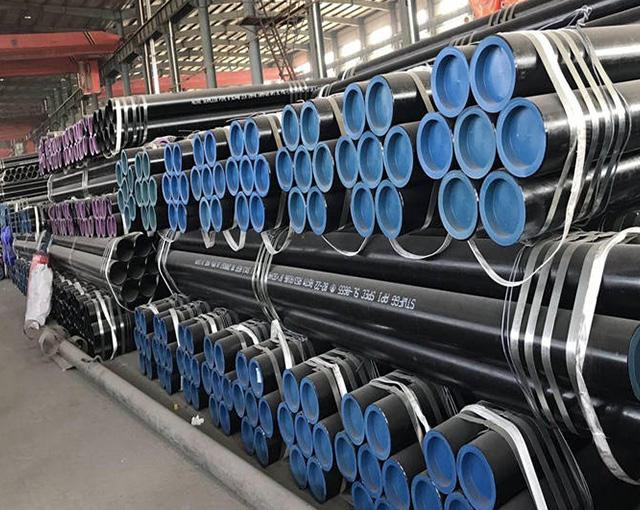
Unlike API 5L, API 5CT specifies requirements for casing and tubing used in oil and gas well construction and production.
These products play different roles in well operations.
Casing Pipe
Casing is installed in the wellbore to support the well walls, isolate different underground formations, and help maintain well integrity.
Common casing applications include surface casing, intermediate casing, and production casing.
Tubing Pipe
Tubing is installed inside the casing and provides a passage for oil and natural gas to flow from the producing formation to the surface.
Both casing and tubing are essential components of oil and gas well systems.
API 5CT offers several steel grades with different strength levels and service characteristics.
| Grade | Typical Application |
|---|---|
| H40 | Casing and tubing applications |
| J55 | Common casing and tubing applications |
| K55 | Casing and tubing applications |
| N80 | Higher-strength casing and tubing |
| L80 | Applications with specified corrosion-related requirements |
| P110 | High-strength casing and tubing |
| Q125 | High-strength applications with specific requirements |
The choice of grade depends on well depth, pressure, temperature, geological conditions, and corrosion environment.
Some grades, including L80, have specific material and testing requirements. The appropriate grade and type must be confirmed against the project specification.
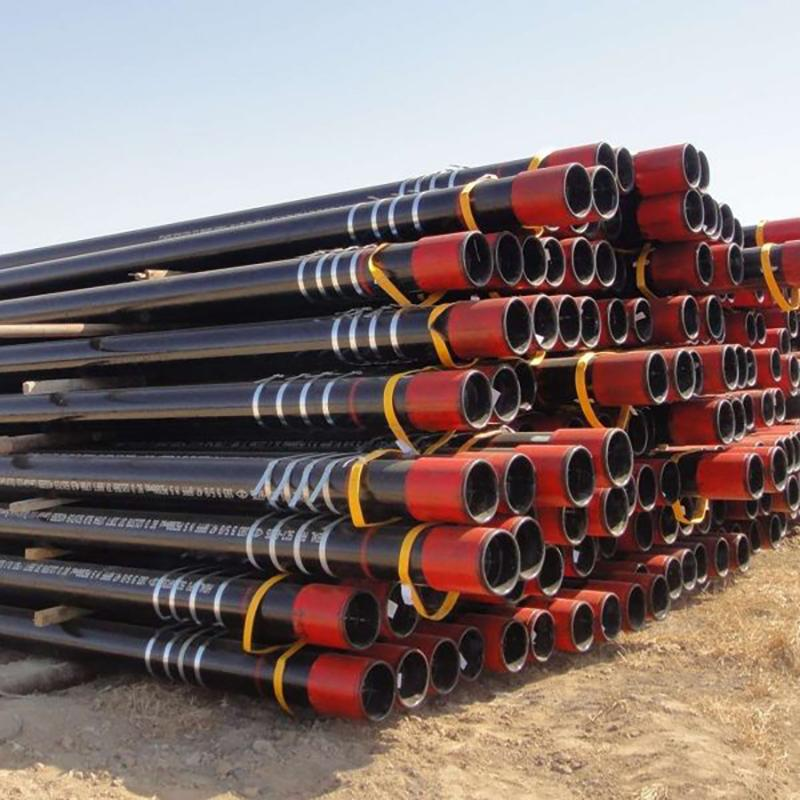
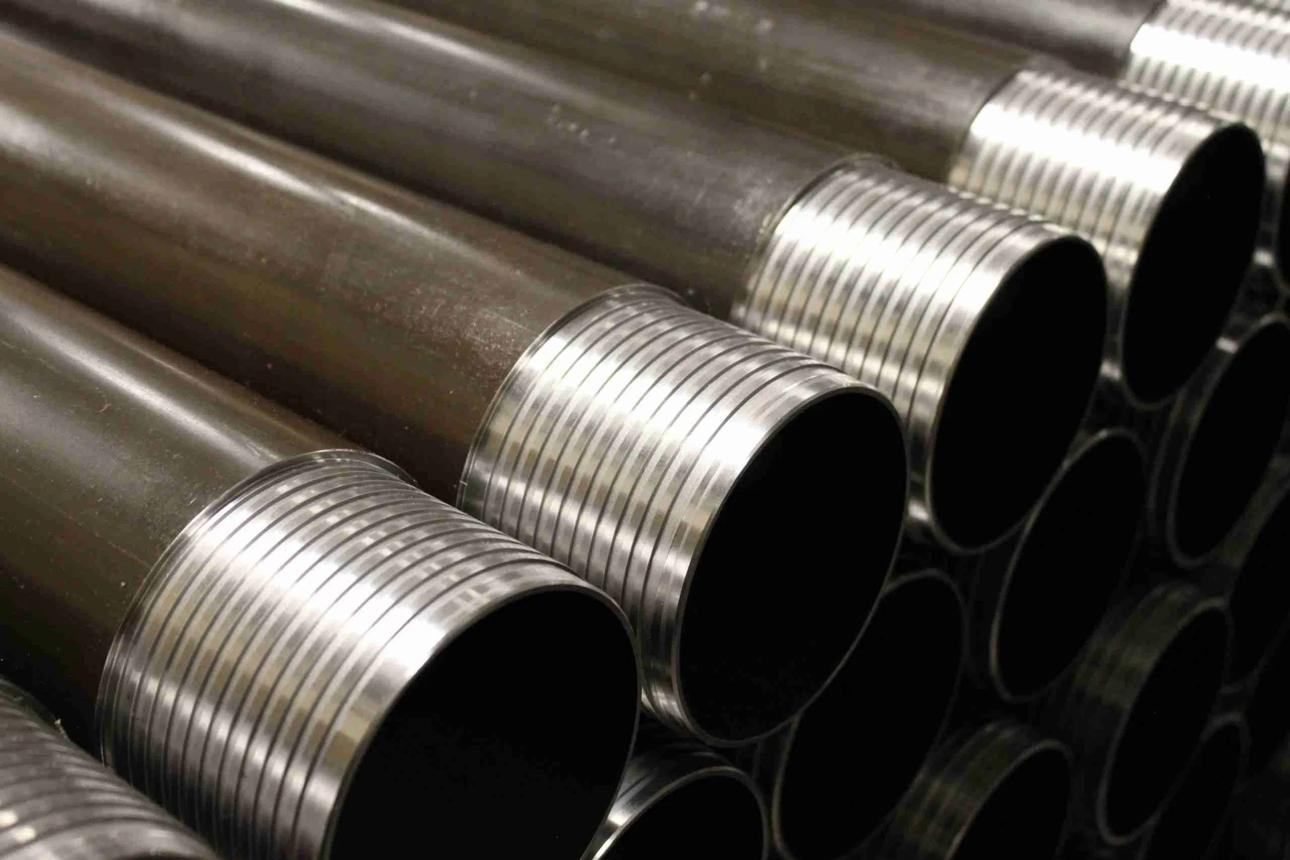
Connection type is another important consideration when purchasing API 5CT pipes.
Common API casing connections include:
STC: Short Thread and Coupling
LTC: Long Thread and Coupling
BTC: Buttress Thread and Coupling
Tubing connections may include EUE (External Upset End) and NUE (Non-Upset End).
Connection selection should be based on well design, installation requirements, and applicable API specifications.
Although both standards are widely used in the oil and gas industry, their intended applications and product requirements are different.
| Comparison | API 5L | API 5CT |
|---|---|---|
| Main Product | Line Pipe | Casing and Tubing |
| Main Application | Pipeline transportation | Oil and gas well construction and production |
| Common Grades | B, X42, X52, X60, X65, X70 | J55, K55, N80, L80, P110 |
| Product Types | Seamless and welded pipes | Casing and tubing |
| Main Function | Transport fluids | Support wellbore and transport production fluids |
| Common Connections | Pipeline joining and welding | Threaded and coupled connections |
The most important difference is their intended use. API 5L is designed for pipeline systems, whereas API 5CT is designed for oil and gas well tubular products.
They should not be considered interchangeable simply because both are used in petroleum-related projects.
For international buyers, choosing the right API steel pipe involves more than selecting a grade.
The following details should be confirmed before placing an order.
1. Applicable Standard
Confirm whether the project requires API 5L or API 5CT, including the applicable edition and additional project specifications.
2. Steel Grade
Specify the required grade, such as X52, X65, J55, N80, or P110.
3. Pipe Dimensions
Provide the required outside diameter, wall thickness, and pipe length.
4. Manufacturing Process
For API 5L, confirm whether seamless, ERW, LSAW, or SSAW pipes are required.
For API 5CT, specify casing or tubing, together with the required connection type.
5. Product Specification Level
For API 5L, confirm whether PSL1 or PSL2 is required.
6. Inspection and Certification
Check the required inspection documents, mechanical test reports, chemical composition, hydrostatic testing, and traceability requirements.
Buyers should also verify the supplier's actual product compliance and API licensing status when API monogram certification is required.
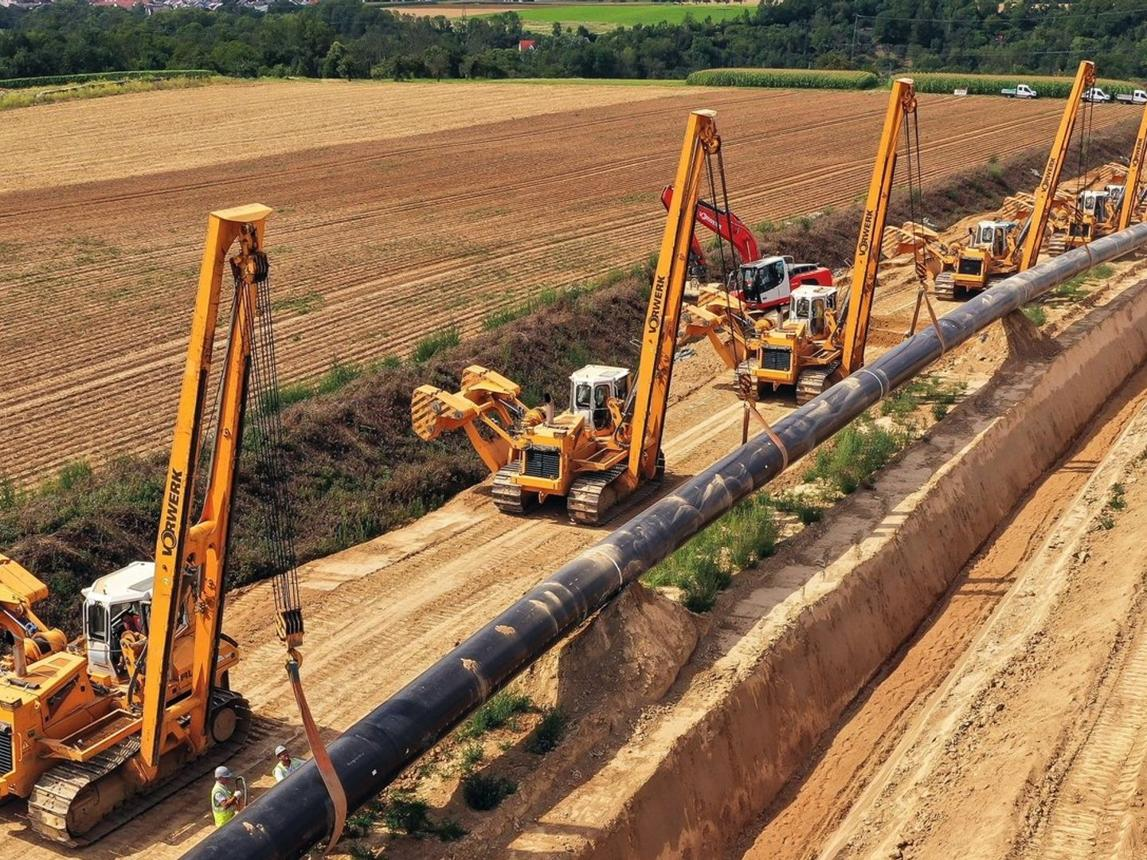
Sourcing API steel pipes from China can provide international buyers with access to a wide range of product specifications and manufacturing options.
Jinbaifeng Steel Co., Ltd. is a China-based steel supplier providing steel sourcing solutions for international customers.
Our product range includes carbon steel pipes, seamless steel pipes, welded steel pipes, steel plates, galvanized steel products, and structural steel.
For buyers looking for API 5L line pipes or API 5CT casing and tubing, we can assist with product sourcing according to specific grades, dimensions, technical requirements, and availability.
When sending an inquiry, please provide:
Required API standard
Steel grade
Pipe outside diameter
Wall thickness
Pipe length
Required quantity
Manufacturing process or connection type
Inspection and certification requirements
Delivery destination
Contact Jinbaifeng Steel Co., Ltd. to discuss your steel pipe requirements and request a quotation.
Jinbaifeng Steel Co., Ltd.
Website: https://www.jinbaifengmetal.com/